Your words are only the tip of the iceberg

Somatic communication coaching works beneath the surface
by Jana Denker
A woman can know the perfect boundary sentence and then find herself explaining it for five minutes. She knows the words. That isn’t the problem.

These days, AI can give you that perfect sentence in seconds. But can you actually say it out loud when the person in front of you looks disappointed?
You know what your work is worth. Then someone pushes back on the price and you feel the urge to discount.
Or perhaps you would love to speak on a stage or be a guest on a podcast. But when the moment comes, your throat closes and the words you had in your head become difficult to access.
This is the difference between communication skill and communication capacity.
Communication skill is knowing what to say and how to say it.
Communication capacity is being able to access and use that skill when something matters.
Communication skill is what we tend to see: the words and techniques. The tip of the iceberg. Communication capacity is shaped beneath the surface.
What do you allow yourself to ask for or say no to? How comfortable are you using your voice when what you have to say might disappoint someone? All of this has a history. Your identity matters here, as does your nervous system.
Your body learns from experience too. Old communication patterns can run like a blueprint through the nervous system, shaping what feels possible long before you consciously choose your words.
What does somatic actually mean?
Somatic is greek and means body-based. In somatic communication coaching, we work with communication patterns where they also live: in the body and nervous system.
You can understand a pattern perfectly and still repeat it. Knowing that you are allowed to say no doesn’t necessarily stop the impulse to explain when someone is disappointed. . Your nervous system is running old responses like an old blueprint in the background. Often without you noticing. This is why insight alone is often not enough. The nervous system updates when we work with the body and with repetition
Who are you when you say it?
In somatic communication coaching, we work with what you say and who you are when you say it. I call this your stance.
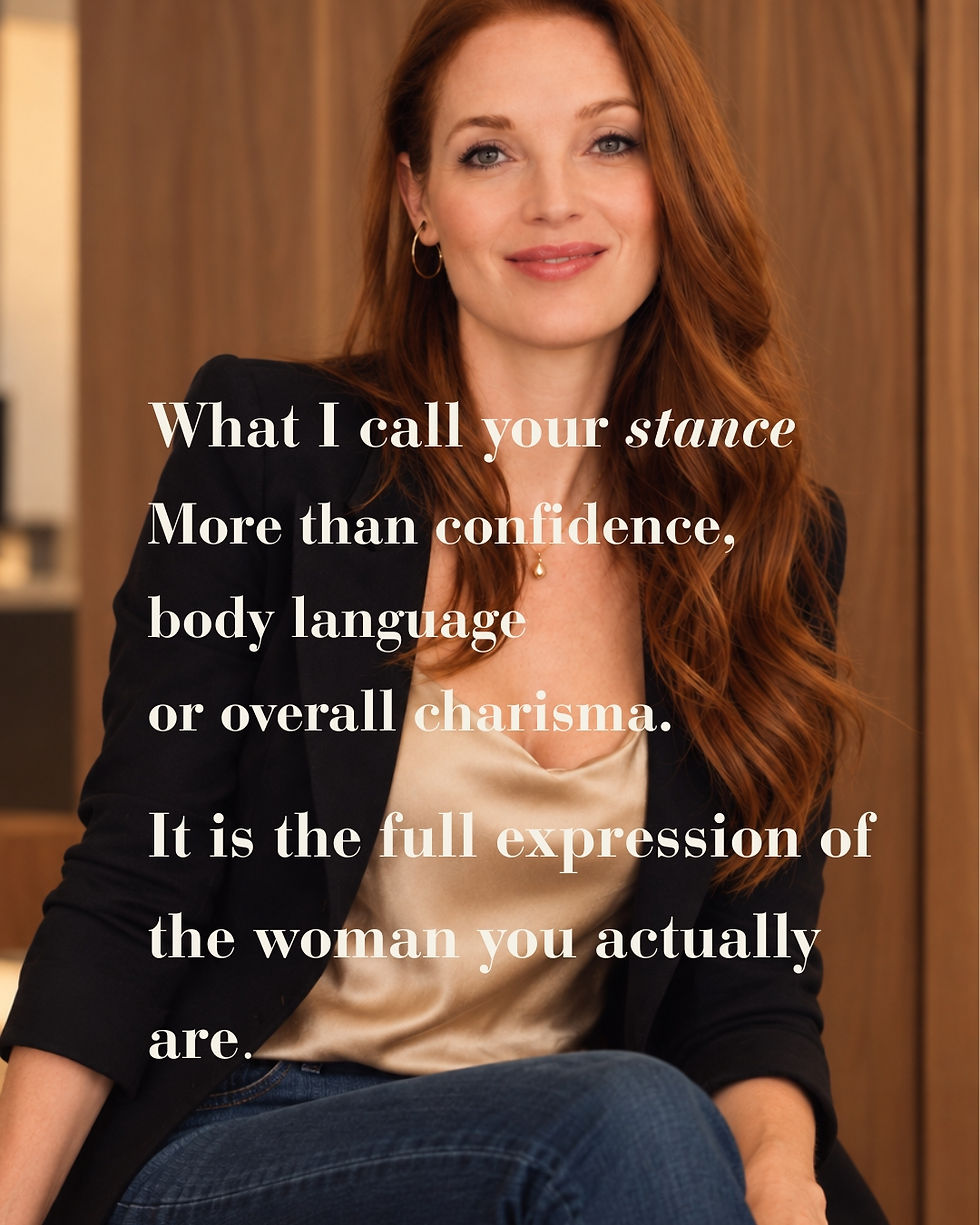
Stance is more than confidence, body language or charisma. It is the full expression of the woman you are. This is what people perceive about you.
Your identity enters the conversation with you, together with what you have learned about using your voice and what you expect to happen when you do.
This is why the same words can communicate something entirely different depending on the place they come from. Working with stance is not about performing confidence. It is about changing the place from which you communicate.
What changes when communication capacity expands?
This is where the work becomes tangible. Knowing the right boundary sentence is useful. Being able to hold that boundary when someone pushes back can change a relationship. Knowing what your work is worth matters. Being able to name your fee and stay with it when someone hesitates can change what you earn.
Perhaps you already know that you have something worth saying. Expanding your capacity can mean being able to use your voice when the room gets bigger and more people are listening.
Many of the women I work with already know how to communicate well.
Our work makes that ability more available in the moments that carry more weight.
Back to the iceberg
Words still matter enormously. Sometimes a sentence needs to be clearer, or a difficult conversation needs a better structure. This is where my twenty years of working professionally with language come in too.
But the words are the part we can see. The tip of the iceberg.
Somatic communication coaching works also beneath the surface, where your capacity to use those words is shaped.
So when the moment comes, you don’t only know what you want to say.
You can say it.


Comments